The short answer
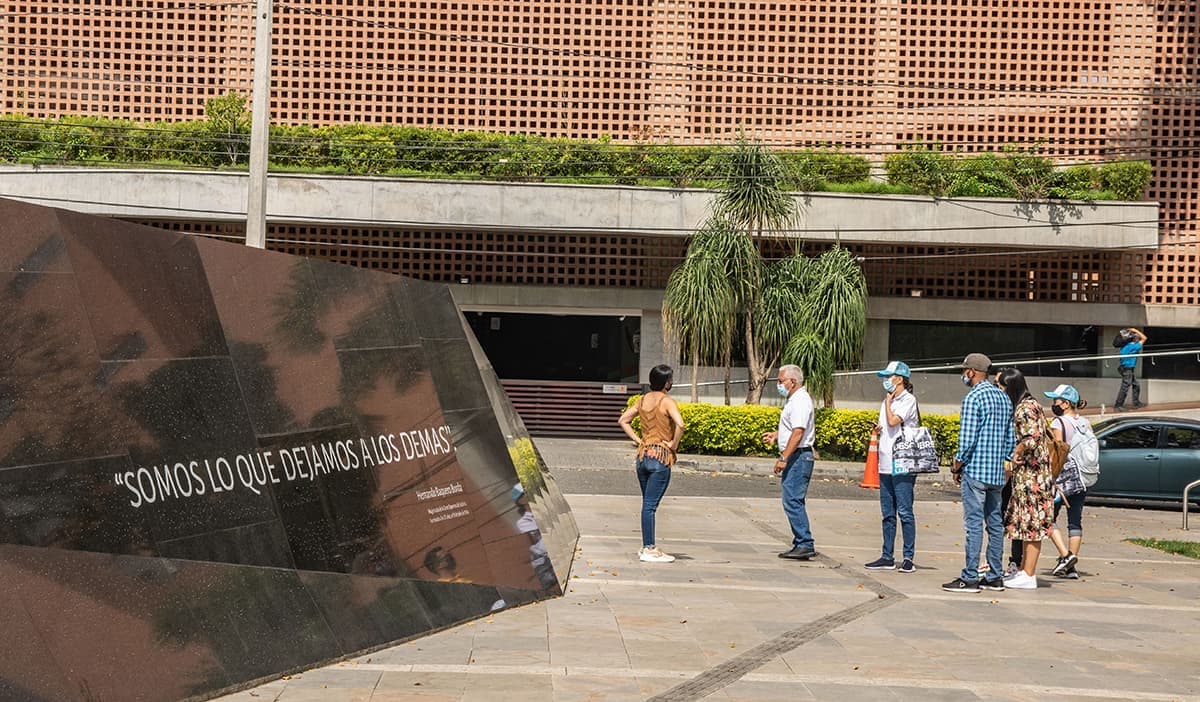
Inflexión Park is Medellín's memorial to the victims of drug trafficking. It sits in El Poblado, on the lot where the Mónaco building stood, the Escobar family's home, which the city demolished in 2019. It is an open-air public park, and its granite wall has 46,612 perforations, one for each life the city lost between 1983 and 1994. Our Pablo Escobar history tour ends here on purpose.
What stood here before: the Mónaco building
The Mónaco was built in 1986 in the Santa María de los Ángeles neighborhood: eight floors, twelve apartments, thirty-four underground parking spaces, pools, tennis courts and a Turkish bath, named after the principality. Escobar's family lived there. On January 13, 1988, at 1:30 in the morning, a car with about 80 kilos of explosives, attributed to the Cali cartel, blew up in front of the building. It was Colombia's first car bomb and the start of the war between the two cartels; press accounts speak of three dead and around ten injured among the neighbors.
It then passed to the State: it housed prosecutors' investigators, suffered another attack in 2000 and ended up occupied by the police. For years, empty, it was a mandatory stop for the tours that sold Escobar as an attraction. On February 22, 2019, at 11:54 in the morning, the city imploded it in under three seconds in front of about 1,600 people. The mayor at the time summed up the decision in one sentence: it was not a victim's house, it was a perpetrator's house.
What the park is and what it stands for
The Inflexión Memorial Park opened to the public on December 20, 2019, 301 days after the demolition. It was designed by four architects from the National University in Medellín, winners of a competition with 45 entries, on about 5,000 square meters. Its name says it all: the point at which the city changed course.
- The wall. A black granite wall 70 meters long and 5 meters high, with four breaks and 46,612 perforations that light up at night. Each one is a life.
- The timeline. On the south wall, 208 violent events from those years, dated.
- The Path of Heroes. Nine monoliths with messages from public figures murdered by the cartel.
- The rubble. Thirty cubic meters of the Mónaco were kept inside the park. The place was not erased: its protagonist was changed.
- The urban forest. Trees and shade where there used to be private pools.
The numbers behind the wall
The 46,612 figure is described by the mayor's office as the lives lost in Medellín between 1983 and 1994; we could not find the methodology behind it published, so we cite it for what it is, the memorial's official figure. What is documented gives the scale: in 1991, the worst year, Medellín recorded more than 6,300 homicides, a rate close to 380 per 100,000 inhabitants, the highest in the world at the time. In 1990 the cartel put a price on every police officer, and according to the sources between 400 and 500 officers were killed in those years.
And the violence left the city: Avianca flight 203, which exploded in mid-air on November 27, 1989 with 107 people aboard, and the bomb against the DAS building in Bogotá nine days later, with dozens dead and about 500 injured. That is what we talk about on the tour, not the parties.
How to visit
It is an open-air public park with no ticket office, in the Santa María de los Ángeles neighborhood of El Poblado, a few minutes by taxi from Parque de El Poblado. We found no official opening hours published: go by day, when the names are easy to read, or at dusk, when the wall's perforations light up. By taxi or ride app it is enough to say "Parque Inflexión".
One more thing. In 2023 residents complained that the park had become a stop for narco-tour buses, with music and alcohol. It is a memorial in a residential neighborhood: visit it quietly, without posing and without buying anything with Escobar's face on it.
Why our tour ends here
The route starts at the family museum, Beyond Escobar, precisely to contrast its version; continues to the rooftop in Los Olivos where he died and to the Jardines Montesacro cemetery, and ends at Inflexión Park, facing the wall. We close there so that the last thing you take with you is the victims' names, not the character's. The guides grew up in the Medellín of those years and some lost relatives; they tell what they saw. Why we do it this way is in Pablo Escobar without glorifying him.
What Medellín asks of its visitors
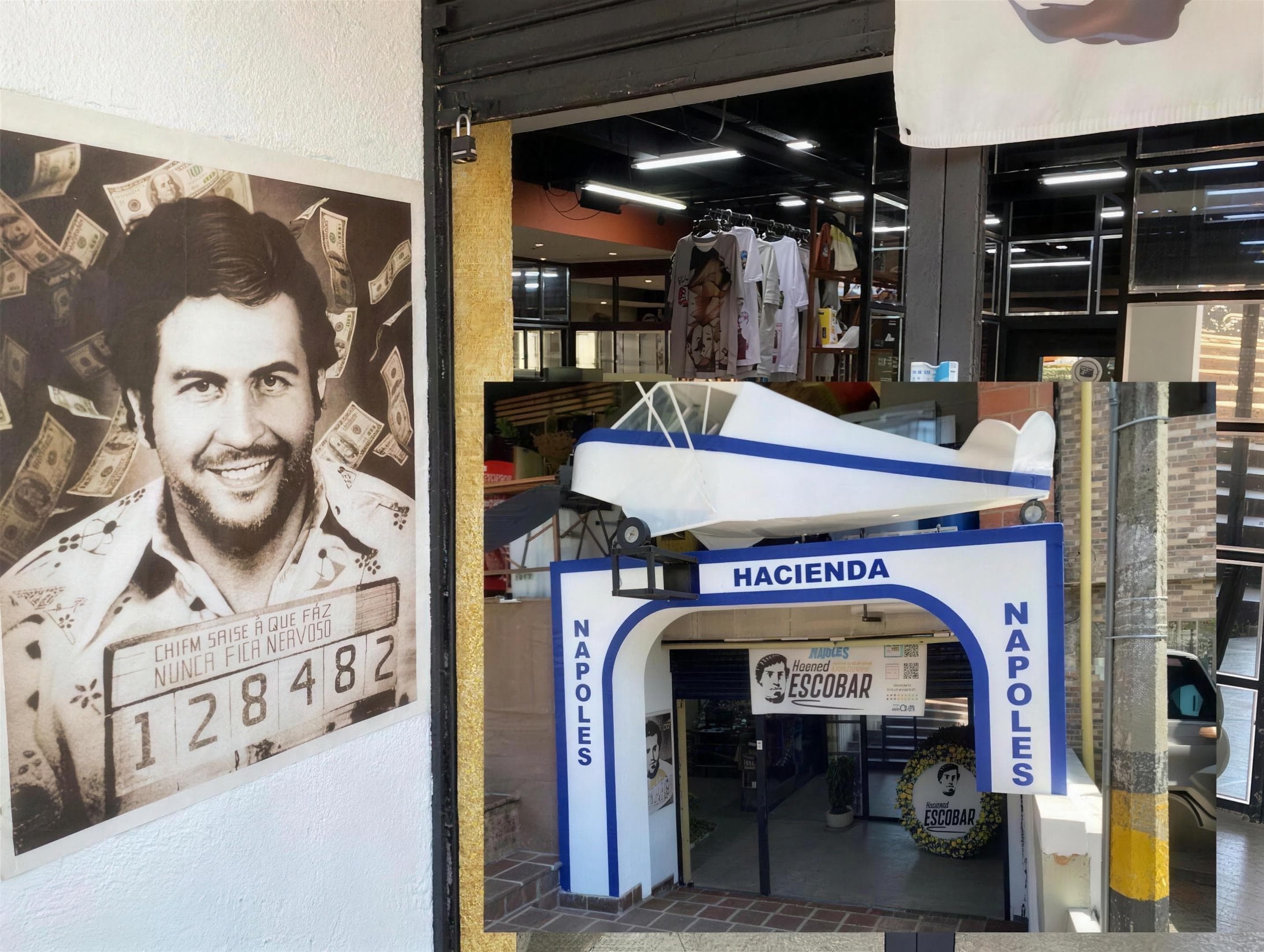
The city has spent years trying to get its history told without apology. In 2025 the mayor's office launched a responsible-commerce campaign in Comuna 13 against glorifying violence, and Congress is considering a bill to fine and confiscate merchandise bearing Escobar's image. When you choose a tour, check whether it stops at a place dedicated to the victims; if not, it is a fan tour. And in the Los Olivos neighborhood, the house where he died is now private property: you look at it from the sidewalk across the street, nothing more.
With the city in context, the rest of your trip is in things to do in Medellín and how to get around with peace of mind.
Sources
Facts checked on October 6, 2026. Where sources differ (deaths in the 1988 attack, 1991 homicides), we give the range.
- El Colombiano: history of the Mónaco building
- El Colombiano: the Mónaco implosion
- El Colombiano: Inflexión Park opens to the public
- MCHAP: Inflexión Memorial Park project sheet
- El Colombiano: narco-tours and the park's neighbors
- Medellín mayor's office: responsible commerce without glorifying violence
- El Colombiano: history of homicides in Medellín
- El Tiempo: the Los Olivos house
Frequently asked questions
What is Inflexión Park in Medellín?
A public memorial to the victims of drug trafficking, built where the Escobar family's Mónaco building stood. It opened on December 20, 2019.
What do the wall's 46,612 perforations mean?
One for each life lost in Medellín between 1983 and 1994, according to the memorial's official figure. They light up at night.
How much does it cost to enter Inflexión Park?
Nothing. It is an open-air public park with no ticket office.
Where is it and how do you get there?
In the Santa María de los Ángeles neighborhood, in El Poblado, a few minutes by taxi from Parque de El Poblado. By taxi or ride app it is enough to say "Parque Inflexión".
Why was the Mónaco building demolished?
Because it had become a narco-tour attraction. The city imploded it on February 22, 2019 and built the memorial to the victims in its place.